Tissue Transglutaminase, TGase, and Meat Processing Control
Troubleshoot transglutaminase dosage, pH, temperature, QC, COA/TDS/SDS, and supplier checks for meat processors using TGase.
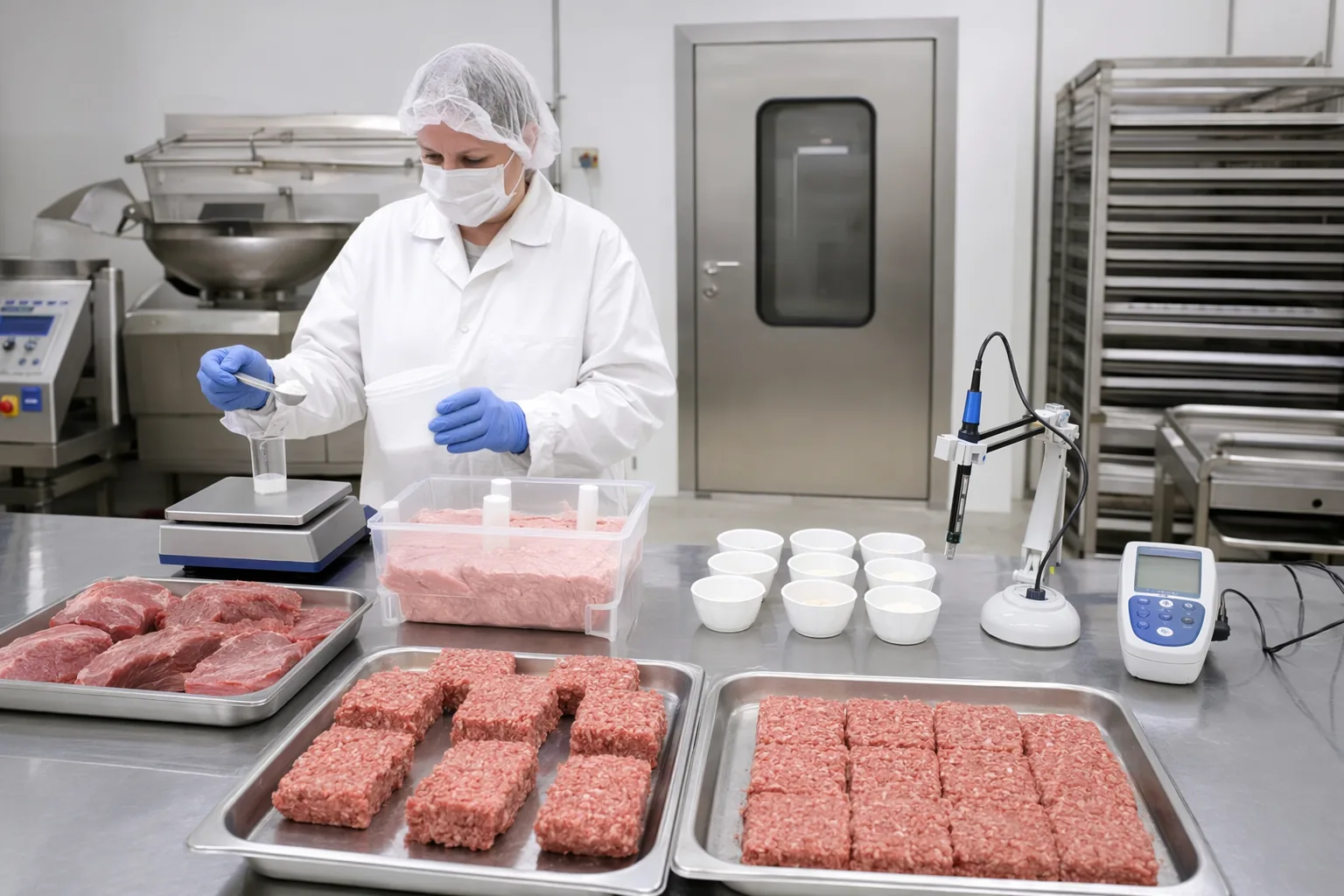
For industrial meat processors, the key is not medical tissue transglutaminase testing; it is controlled use of food-grade microbial transglutaminase to improve binding, texture, sliceability, and cost-in-use.
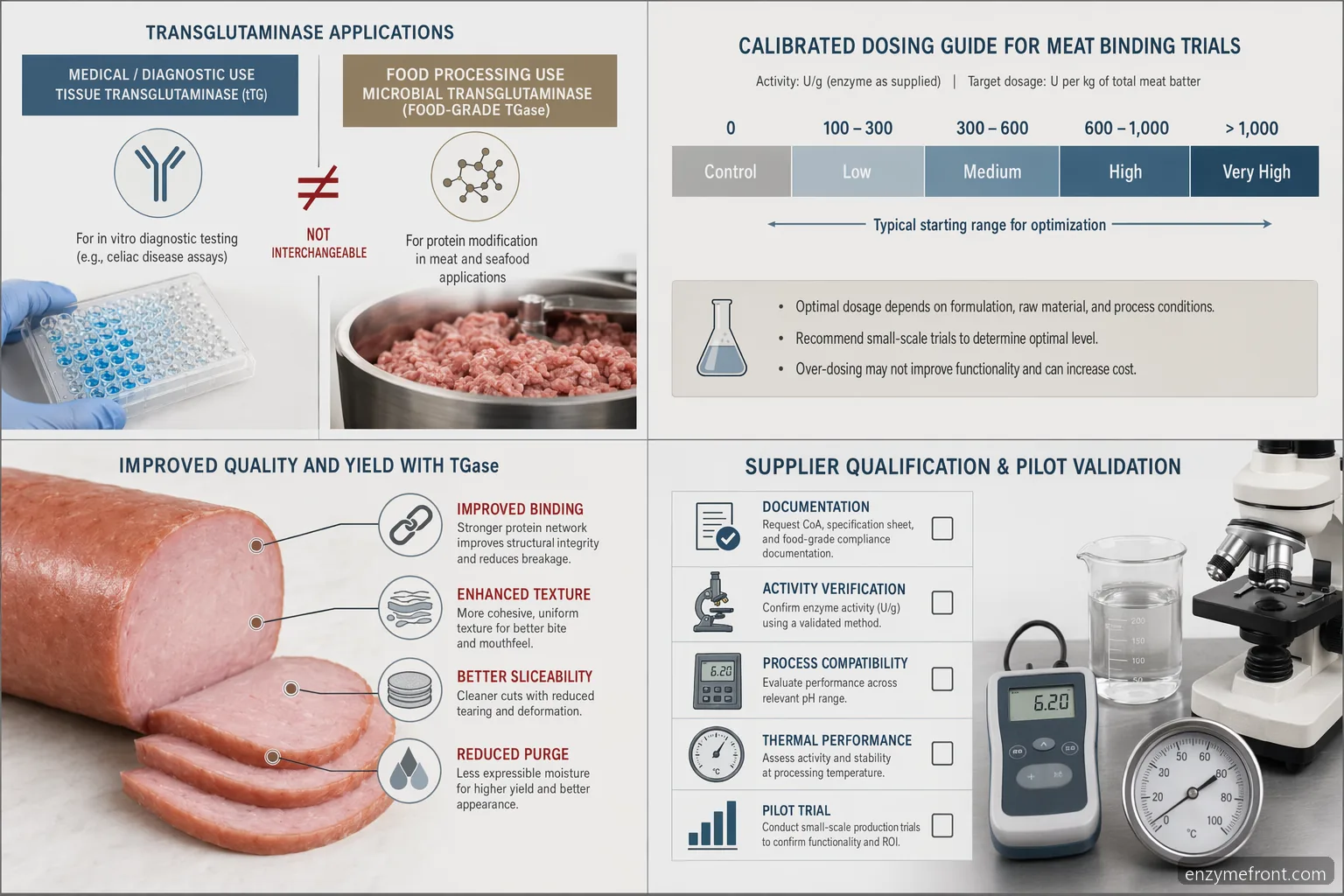
First, Separate Medical Search Terms from Food TGase
The phrase tissue transglutaminase often appears in searches for tissue transglutaminase iga, tissue transglutaminase ab iga, tiss transglutaminase iga, anti transglutaminase antibodies, or anticorps anti transglutaminase. Those terms relate to clinical laboratory diagnostics and are not purchasing specifications for a meat plant. In B2B meat processing, buyers usually need food-grade microbial transglutaminase, sometimes called transglutaminase enzyme, TGase food, or transglutaminase meat glue. Its function is to catalyze cross-links between glutamine and lysine residues in proteins, helping restructure meat pieces, improve slice integrity, and reduce separation in formed products. The practical decision is not whether a medical antibody result is high or low; it is whether a supplier’s enzyme activity, carrier system, process window, documentation, and labeling support your target product and market.
Use medical terms only to clarify search intent, not as process specifications. • Specify microbial transglutaminase activity and carrier composition. • Confirm intended use in meat processing with supplier documentation.
Dosage Bands for Meat Binding Trials
A safe starting range for many commercial TGase preparations in comminuted, restructured, or portion-controlled meat products is 0.2–0.8% by finished formula weight. Low-protein, high-fat, high-water, or heavily diluted systems may need higher use within supplier guidance, while lean, protein-rich substrates may respond at the lower end. Because commercial activity units vary by manufacturer, do not transfer a percentage directly between suppliers without comparing activity, carrier, moisture contribution, and recommended contact time. For troubleshooting, run a bench matrix such as 0.2%, 0.4%, 0.6%, and 0.8% under the same mixing, stuffing, vacuum, and setting conditions. Evaluate the lowest dosage that meets texture and yield targets rather than the highest visual bind. This controls cost-in-use and reduces risks of rubbery bite, overbinding, or process inflexibility.
Trial 0.2–0.8% commercial preparation as an initial screening band. • Normalize comparisons by enzyme activity, not only dosage weight. • Calculate cost-in-use per kg finished product and per kg saleable yield.
pH, Temperature, and Time Windows
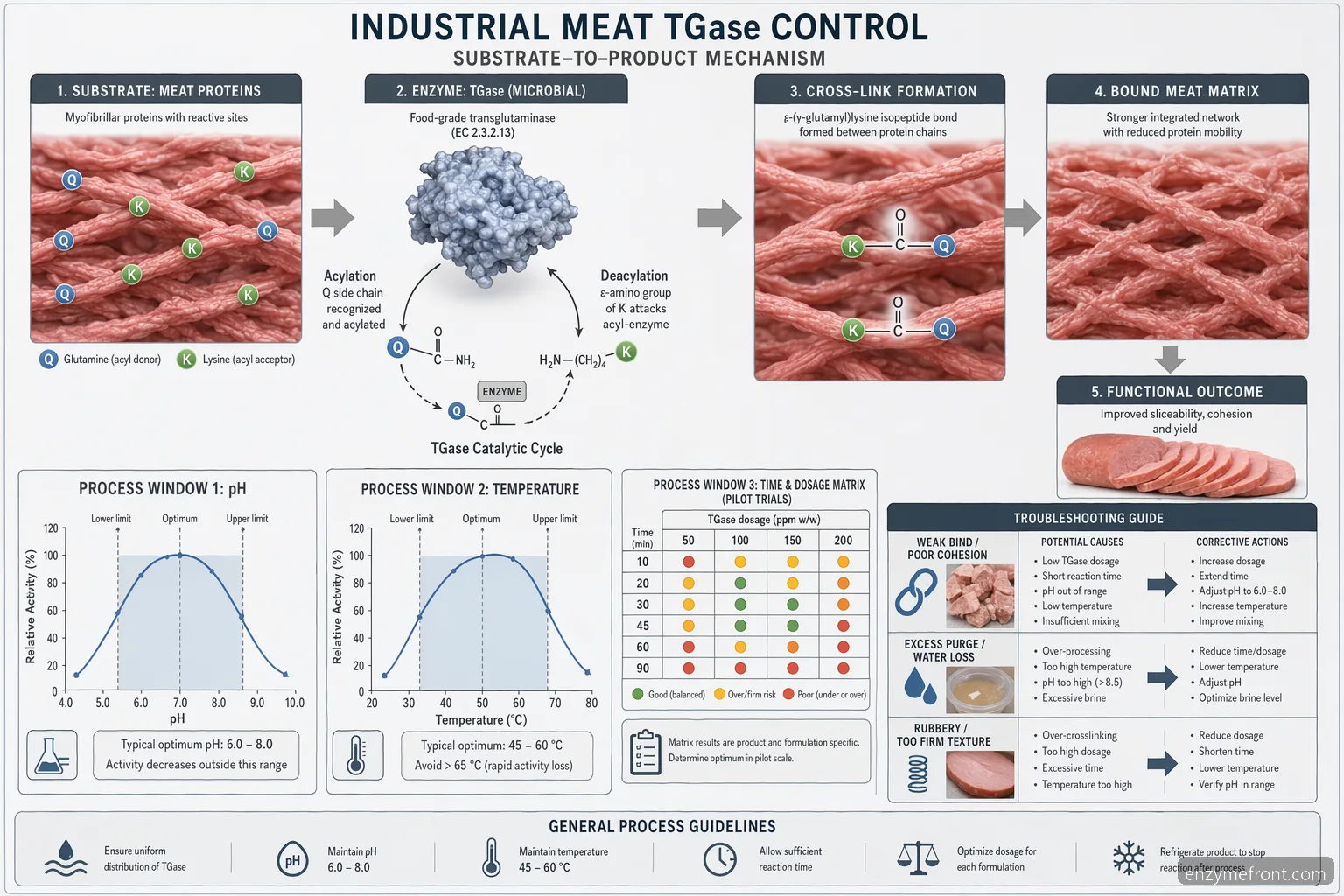
Most food transglutaminase systems perform best near the natural pH of meat, commonly pH 5.5–7.0. Performance may decline in very acidic marinades, aggressive cured systems, or products with uneven pH distribution. Temperature control is equally important. Processors often mix cold to manage microbiological risk and protein extraction, then allow a controlled setting period, commonly 2–24 hours depending on product geometry, dosage, and supplier guidance. Cold holding at 0–5°C can support gradual binding in refrigerated processes, while warmer reaction steps may increase speed but must be justified by food safety validation. Cooking typically inactivates the enzyme when the product reaches validated thermal conditions, often above 70°C core depending on the process. Do not use temperature as a shortcut unless your HACCP plan, microbiology data, and sensory results support it.
Target pH 5.5–7.0 for initial trials. • Control cold chain during mixing and forming. • Validate set time by product thickness and desired bind strength. • Confirm enzyme inactivation in the final heat process.
Troubleshooting Weak Bind, Purge, or Rubbery Texture
Weak bind is often caused by uneven enzyme distribution, insufficient contact time, low available protein, excessive surface fat, high purge, or poor compression during forming. If seams open after slicing or cooking, check raw material temperature, vacuum level, mixing sequence, salt-soluble protein extraction, and whether TGase was hydrated or dispersed according to the TDS. Purge or wet surfaces can physically dilute the enzyme and reduce intimate contact between meat pieces. Conversely, rubbery or unnatural texture may indicate excessive dosage, extended warm reaction time, or overdevelopment in lean systems. Change only one variable per pilot run so the cause is visible. For meat glue style applications, surface coverage and pressure matter as much as enzyme percentage, especially in whole-muscle restructuring or portion assembly.
Improve enzyme dispersion before increasing dosage. • Trim or control surface fat where bonding is required. • Measure purge loss, sliceability, tensile strength, and cook yield. • Run sensory checks to avoid overbinding.
Supplier Qualification and Pilot Validation
Before scaling TGase in a meat plant, request a current COA, TDS, and SDS for the exact lot or grade under evaluation. The COA should identify relevant quality attributes such as activity, appearance, moisture where applicable, microbiological limits, and lot traceability. The TDS should state recommended application level, processing conditions, storage, shelf life, and carrier or functional ingredients. The SDS supports safe handling and employee training. Also confirm food regulatory suitability for your sale regions, allergen and labeling implications, and whether the product is blended with proteins, salts, starches, or anticaking agents. A qualified supplier should support pilot validation rather than promise universal results. Final approval should be based on plant trials, finished-product QC, shelf-life observation, consumer specification, and documented cost-in-use.
Request COA, TDS, SDS, and lot traceability. • Verify labeling, allergen, and regional regulatory suitability. • Pilot under actual plant mixing, forming, chilling, and cooking conditions. • Approve based on QC data and commercial economics.
Technical Buying Checklist
Buyer Questions
No. Tissue transglutaminase is commonly associated with human biology and medical lab testing. Meat processors normally use food-grade microbial transglutaminase, also called TGase or transglutaminase enzyme. When purchasing for industrial meat processing, specify the food application, enzyme activity, carrier system, dosage guidance, and documentation instead of using medical diagnostic terminology as a procurement specification.
A practical first pilot range is 0.2–0.8% of the commercial TGase preparation by finished formula weight. Because enzyme activity varies between products, compare supplier activity units and TDS recommendations before transferring a dosage. Select the lowest level that achieves target bind, slice quality, yield, and sensory profile. This usually gives better cost-in-use than simply increasing dosage until the strongest bind appears.
Terms such as tissue transglutaminase iga, tiss transglutaminase iga, tissue transglutaminase ab iga, tissu transglutaminase iga lev, anti transglutaminase antibodies, and anticorps anti transglutaminase are medical-search phrases. They do not describe a food enzyme buying specification. Industrial users should focus on microbial transglutaminase grade, application data, regulatory suitability, COA, TDS, SDS, and plant validation.
Start around pH 5.5–7.0, which fits many meat systems. Keep mixing and forming cold unless a warmer reaction step has been validated for food safety and quality. Setting can occur under refrigeration over several hours, depending on product thickness and dosage. Final cooking should be validated to meet lethality requirements and inactivate enzyme activity without damaging texture or yield.
Ask for the exact product’s COA, TDS, SDS, lot traceability, storage requirements, shelf life, allergen statement, and regulatory-use information for your target market. Then run pilot trials under your real process conditions. A strong supplier helps interpret dosage, pH, temperature, setting time, and cost-in-use data without making unsupported universal claims about yield, texture, or performance.
Transglutaminase (TGase) for Research & Industry
Need Transglutaminase (TGase) for your lab or production process?
ISO 9001 certified · Food-grade & research-grade · Ships to 80+ countries
Frequently Asked Questions
Is tissue transglutaminase the same as meat processing transglutaminase?
No. Tissue transglutaminase is commonly associated with human biology and medical lab testing. Meat processors normally use food-grade microbial transglutaminase, also called TGase or transglutaminase enzyme. When purchasing for industrial meat processing, specify the food application, enzyme activity, carrier system, dosage guidance, and documentation instead of using medical diagnostic terminology as a procurement specification.
What dosage of transglutaminase should a meat processor test first?
A practical first pilot range is 0.2–0.8% of the commercial TGase preparation by finished formula weight. Because enzyme activity varies between products, compare supplier activity units and TDS recommendations before transferring a dosage. Select the lowest level that achieves target bind, slice quality, yield, and sensory profile. This usually gives better cost-in-use than simply increasing dosage until the strongest bind appears.
Why do tissue transglutaminase iga and antibody terms appear in searches?
Terms such as tissue transglutaminase iga, tiss transglutaminase iga, tissue transglutaminase ab iga, tissu transglutaminase iga lev, anti transglutaminase antibodies, and anticorps anti transglutaminase are medical-search phrases. They do not describe a food enzyme buying specification. Industrial users should focus on microbial transglutaminase grade, application data, regulatory suitability, COA, TDS, SDS, and plant validation.
What pH and temperature are best for TGase food applications in meat?
Start around pH 5.5–7.0, which fits many meat systems. Keep mixing and forming cold unless a warmer reaction step has been validated for food safety and quality. Setting can occur under refrigeration over several hours, depending on product thickness and dosage. Final cooking should be validated to meet lethality requirements and inactivate enzyme activity without damaging texture or yield.
How should we qualify a transglutaminase meat glue supplier?
Ask for the exact product’s COA, TDS, SDS, lot traceability, storage requirements, shelf life, allergen statement, and regulatory-use information for your target market. Then run pilot trials under your real process conditions. A strong supplier helps interpret dosage, pH, temperature, setting time, and cost-in-use data without making unsupported universal claims about yield, texture, or performance.
Ready to source?
Turn This Guide Into a Supplier Brief Request a TGase sample, COA/TDS/SDS package, and pilot-support quote for your meat processing line.
Contact Us to Contribute