Tiss Transglutaminase IgA vs Transglutaminase Enzyme for Meat Processing
Compare tiss transglutaminase IgA search intent with industrial TGase specs for meat processing: dosage, QC, COA/TDS/SDS, pilots.

Searching for tiss transglutaminase IgA often leads to medical antibody terminology, but meat processors need a different checklist: food-grade transglutaminase enzyme performance, documentation, pilot validation, and cost-in-use.
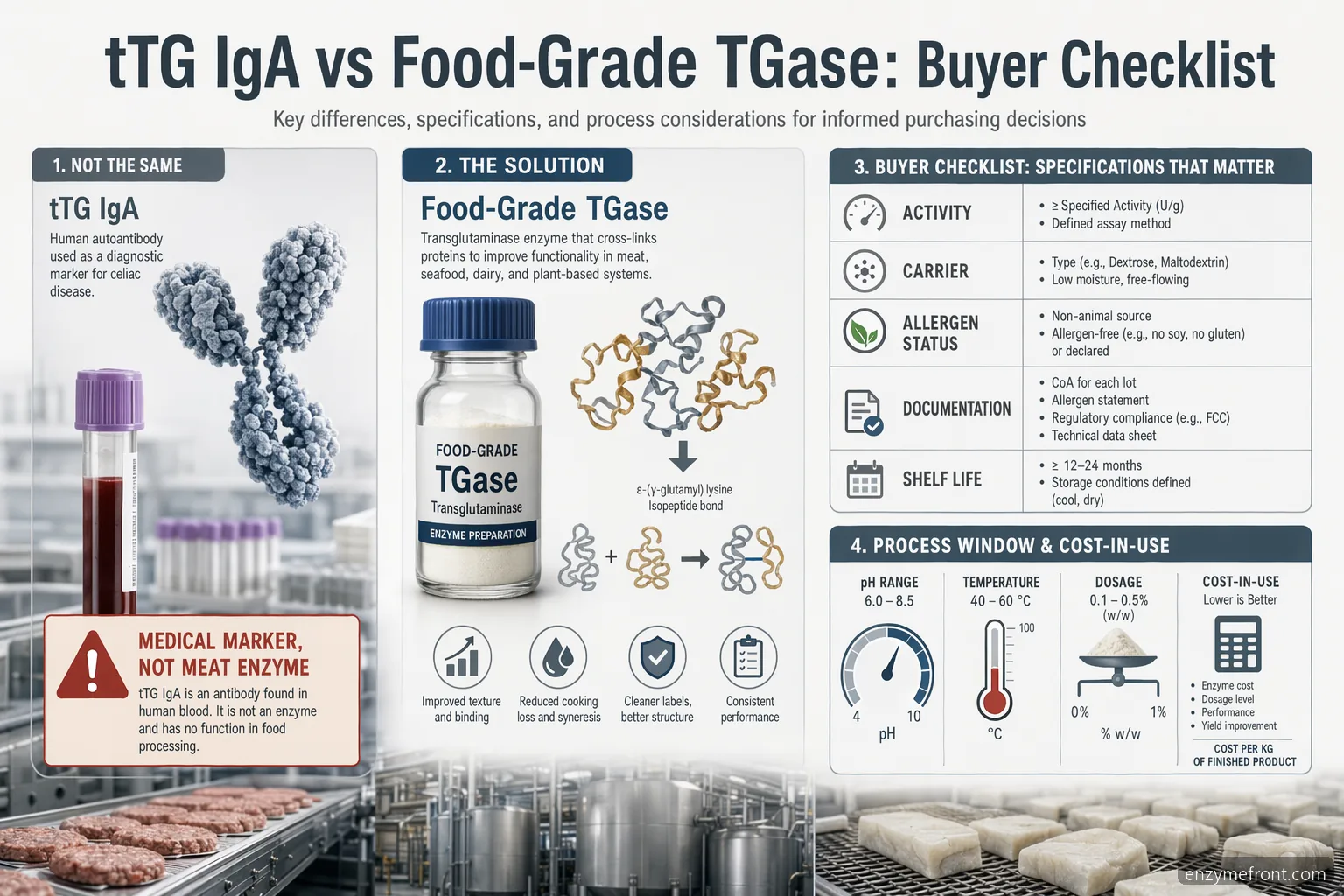
Do Not Confuse tTG IgA With Food-Grade TGase
The phrase tiss transglutaminase IgA is commonly used by searchers looking for tissue transglutaminase IgA, tissue transglutaminase ab IgA, anti transglutaminase antibodies, or anticorps anti transglutaminase. Those terms relate to laboratory testing and are not the same as the transglutaminase enzyme used in food manufacturing. For B2B meat processing, the relevant material is typically microbial transglutaminase, often called TGase food enzyme or, informally, transglutaminase meat glue. It catalyzes cross-linking between protein-bound glutamine and lysine residues, helping improve binding, sliceability, texture, and utilization of meat pieces. Buyers should therefore redirect the comparison from medical terminology to industrial performance specifications. The right question is not about antibody levels, but whether a supplier’s enzyme preparation performs consistently in your meat matrix, brine system, temperature profile, and packaging workflow.
Medical term: tissue transglutaminase IgA. • Industrial term: microbial transglutaminase enzyme. • Buyer focus: activity, handling, documentation, and validated process results.
Specification Checklist for Meat Processing Buyers
A useful transglutaminase specification starts with declared enzyme activity, assay method, activity tolerance, carrier composition, appearance, solubility, moisture, microbiological limits, and recommended storage conditions. In meat processing, suppliers should also explain whether the product is optimized for comminuted meat, formed muscle, restructured steaks, injected products, emulsified sausage, poultry, seafood blends, or hybrid protein systems. Ask how the enzyme disperses in dry blends, brines, tumbling systems, or surface applications, because uneven distribution can produce variable bind strength. The technical data sheet should identify typical usage bands and process windows, while the certificate of analysis should confirm lot-specific values. The safety data sheet should describe handling precautions for enzyme dust and occupational exposure controls. A strong supplier will not oversell a single universal dose; they will recommend a pilot protocol based on your formulation, salt level, phosphate use, protein content, and thermal process.
Request COA, TDS, SDS, allergen statement, and lot traceability. • Confirm the activity unit definition and test method. • Evaluate carrier impact on labels, dispersion, and formulation cost. • Check suitability for dry mix, brine, tumble, or surface application.
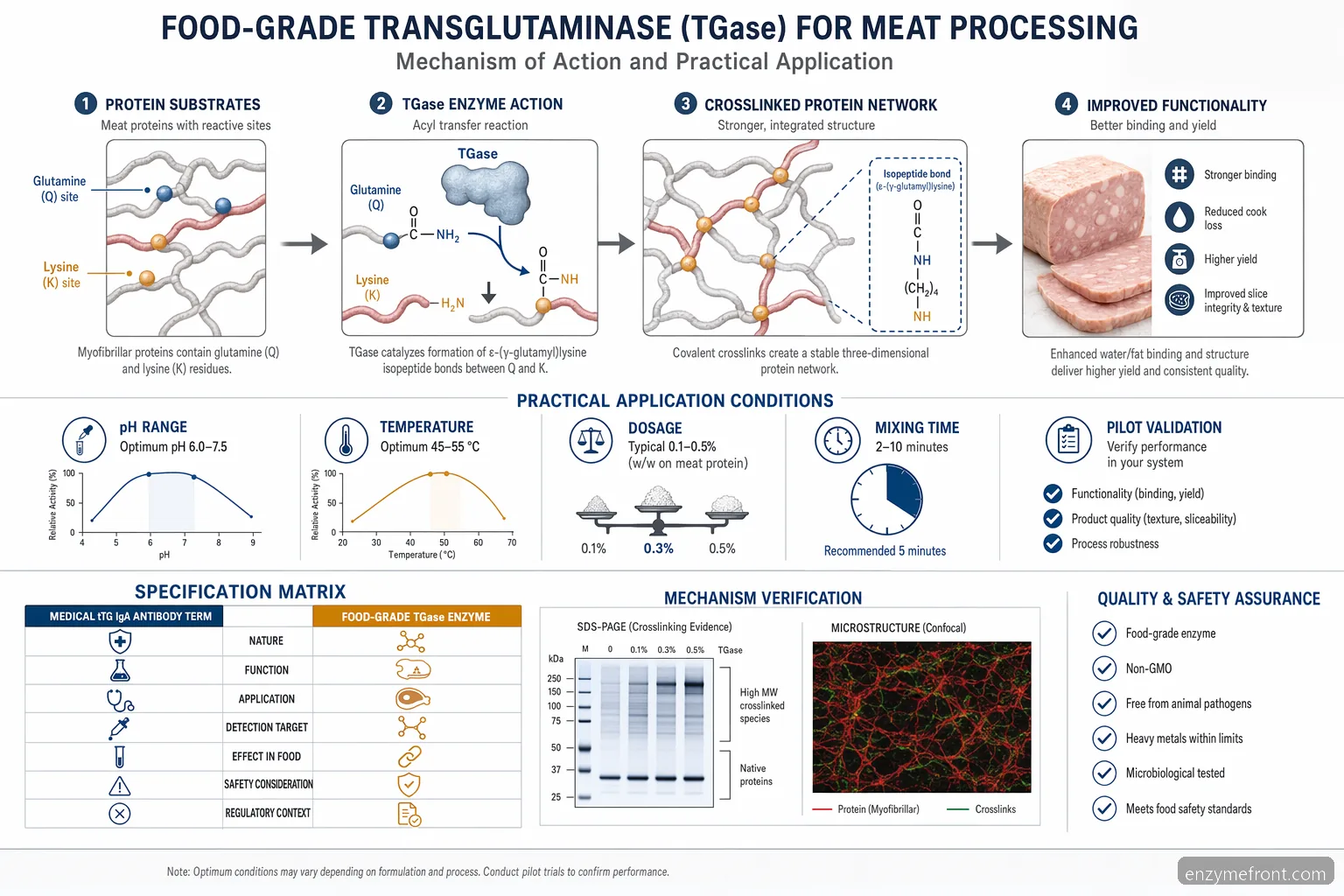
Practical Process Conditions: pH, Temperature, and Dosage
For meat applications, transglutaminase is commonly evaluated around pH 5.5 to 7.0, although exact performance depends on the enzyme preparation and meat system. Many commercial workflows use chilled mixing or tumbling, followed by a holding step that allows protein cross-linking before cooking, slicing, freezing, or packaging. Typical starting dosage trials may range from 0.2% to 1.0% of the finished formulation for enzyme preparations, but the correct band depends on declared activity, carrier dilution, raw material quality, and target texture. A pilot should compare at least three inclusion levels against a no-enzyme control. Temperature should balance enzyme reaction and microbial control: chilled processing is often preferred, while suppliers may recommend specific hold times such as several hours under refrigerated conditions. Heat treatment later in the process can inactivate the enzyme, but validation should be done in the actual product, not assumed from generic data.
Common trial pH: about 5.5–7.0, depending on matrix. • Starting dosage band: often 0.2%–1.0% of enzyme preparation. • Run no-enzyme control plus low, medium, and high dosage trials. • Validate hold time and temperature under your HACCP-controlled process.
QC Checks That Separate Useful TGase From Commodity Offers
When comparing transglutaminase suppliers, quality control should extend beyond price per kilogram. Measure finished-product bind strength, purge loss, cook yield, slice integrity, bite texture, color stability, and sensory acceptability. For formed or restructured meat, tensile or shear testing can help quantify performance. For injected or tumbled products, monitor brine pickup, retained moisture, protein extraction, and uniformity after thermal processing. Microbiological checks remain essential because enzyme functionality must not be used to mask poor raw material quality or inadequate temperature control. Your QC team should also track lot-to-lot consistency by comparing enzyme activity, application dose, and actual plant outcomes. If a product is marketed as transglutaminase meat glue, make sure the informal description is backed by formal specifications, not only visual demonstrations. Reliable suppliers should support controlled trials, troubleshooting, and documentation that procurement, R&D, QA, and operations can all review.
Track bind strength, purge, yield, sliceability, and sensory results. • Compare enzyme lots against a standard internal control. • Confirm microbiological limits and raw material hygiene controls. • Do not judge performance from visual binding alone.
Supplier Qualification and Cost-in-Use Comparison
The lowest unit price is rarely the best basis for selecting a transglutaminase enzyme. Cost-in-use should include dosage required to meet texture targets, yield improvement, trimming utilization, rework reduction, process time, labor impact, storage stability, and rejected-batch risk. A concentrated enzyme may cost more per kilogram but less per metric ton of finished meat if it performs at a lower inclusion rate. Supplier qualification should cover manufacturing consistency, change-control communication, lead time, packaging integrity, shelf life, technical support, and responsiveness during plant trials. Ask for a pilot validation plan before approving a new enzyme: formulation, mixing order, temperature, hold time, sampling points, QC tests, and decision criteria. Avoid unverifiable promises and insist on documents that your quality system can archive. For international teams, align terminology too: searches such as tissu transglutaminase iga lev may be medical, while procurement needs food-grade TGase specifications.
Calculate cost per ton of finished product, not only price per kilogram. • Include yield, labor, process time, and rejection risk in comparisons. • Require documented pilot results before plant-wide conversion. • Confirm supplier change-control and lot traceability procedures.
Technical Buying Checklist
Buyer Questions
No. Tiss transglutaminase IgA is usually a search variation for tissue transglutaminase IgA, a medical laboratory term associated with antibodies. Transglutaminase meat glue is an informal food-industry phrase for microbial transglutaminase enzyme used to bind proteins. Industrial buyers should evaluate food-grade TGase by activity, process fit, COA/TDS/SDS documentation, and pilot results.
A practical first screening range is often 0.2% to 1.0% of the enzyme preparation in the finished formulation, depending on declared activity and carrier dilution. Run a no-enzyme control plus several dosage levels. Measure bind strength, purge, cook yield, sliceability, and sensory results before selecting a commercial dosage.
Request a certificate of analysis for each lot, a technical data sheet, safety data sheet, allergen and composition statements where applicable, shelf-life and storage guidance, and traceability information. For supplier qualification, also ask about change-control procedures, lead times, packaging, technical support, and pilot validation support for your meat process.
Those phrases, including anti transglutaminase antibodies and anticorps anti transglutaminase, come from medical testing terminology in English and French. They are not purchasing specifications for food enzymes. If your goal is meat processing, focus on microbial transglutaminase performance: activity, pH and temperature window, dosage, dispersion, QC outcomes, and compliant documentation.
Treat phrases such as tissu transglutaminase iga lev as likely medical or misspelled search terms, not enzyme procurement language. For B2B sourcing, restate the requirement as food-grade transglutaminase enzyme for meat processing. Then compare suppliers using specification sheets, pilot-scale trials, lot COAs, safety handling data, cost-in-use, and documented performance in your product.
Transglutaminase (TGase) for Research & Industry
Need Transglutaminase (TGase) for your lab or production process?
ISO 9001 certified · Food-grade & research-grade · Ships to 80+ countries
Frequently Asked Questions
Is tiss transglutaminase IgA the same as transglutaminase meat glue?
No. Tiss transglutaminase IgA is usually a search variation for tissue transglutaminase IgA, a medical laboratory term associated with antibodies. Transglutaminase meat glue is an informal food-industry phrase for microbial transglutaminase enzyme used to bind proteins. Industrial buyers should evaluate food-grade TGase by activity, process fit, COA/TDS/SDS documentation, and pilot results.
What dosage of transglutaminase should a meat processor trial first?
A practical first screening range is often 0.2% to 1.0% of the enzyme preparation in the finished formulation, depending on declared activity and carrier dilution. Run a no-enzyme control plus several dosage levels. Measure bind strength, purge, cook yield, sliceability, and sensory results before selecting a commercial dosage.
Which documents should be requested from a TGase supplier?
Request a certificate of analysis for each lot, a technical data sheet, safety data sheet, allergen and composition statements where applicable, shelf-life and storage guidance, and traceability information. For supplier qualification, also ask about change-control procedures, lead times, packaging, technical support, and pilot validation support for your meat process.
Why do searches mention tissue transglutaminase ab IgA or anticorps anti transglutaminase?
Those phrases, including anti transglutaminase antibodies and anticorps anti transglutaminase, come from medical testing terminology in English and French. They are not purchasing specifications for food enzymes. If your goal is meat processing, focus on microbial transglutaminase performance: activity, pH and temperature window, dosage, dispersion, QC outcomes, and compliant documentation.
How should we handle confusing terms like tissu transglutaminase iga lev?
Treat phrases such as tissu transglutaminase iga lev as likely medical or misspelled search terms, not enzyme procurement language. For B2B sourcing, restate the requirement as food-grade transglutaminase enzyme for meat processing. Then compare suppliers using specification sheets, pilot-scale trials, lot COAs, safety handling data, cost-in-use, and documented performance in your product.
Ready to source?
Turn This Guide Into a Supplier Brief Request a TGase specification review and pilot trial plan for your meat processing line.
Contact Us to Contribute