Tissue Transglutaminase 2: Transglutaminase Supplier Guide for Meat Processing
B2B guide to transglutaminase sourcing for meat processing: dosage, pH, temperature, QC, COA/TDS/SDS, pilots, and cost-in-use.
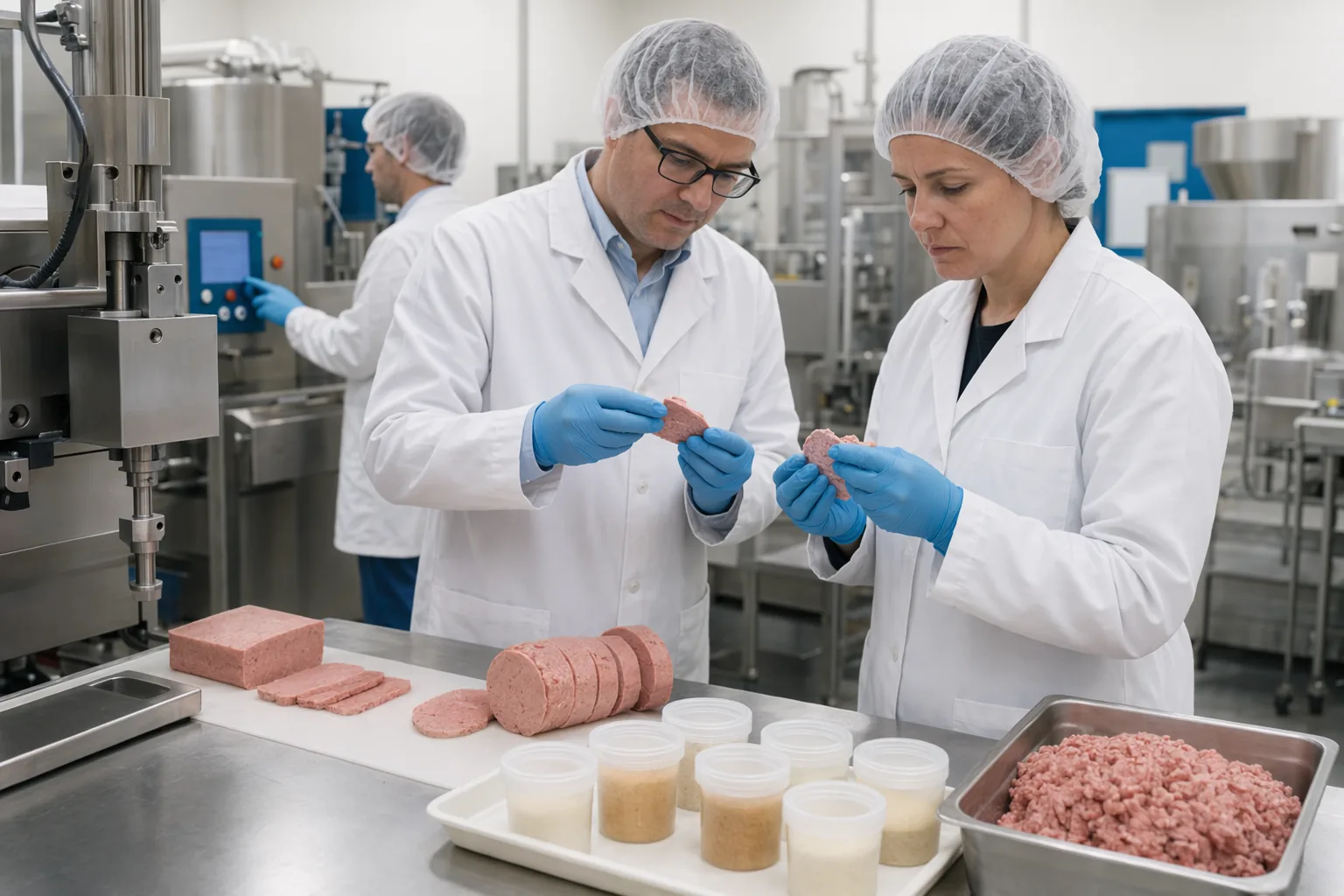
Source transglutaminase for structured meat products with practical guidance on process fit, documentation, pilot validation, and supplier qualification.
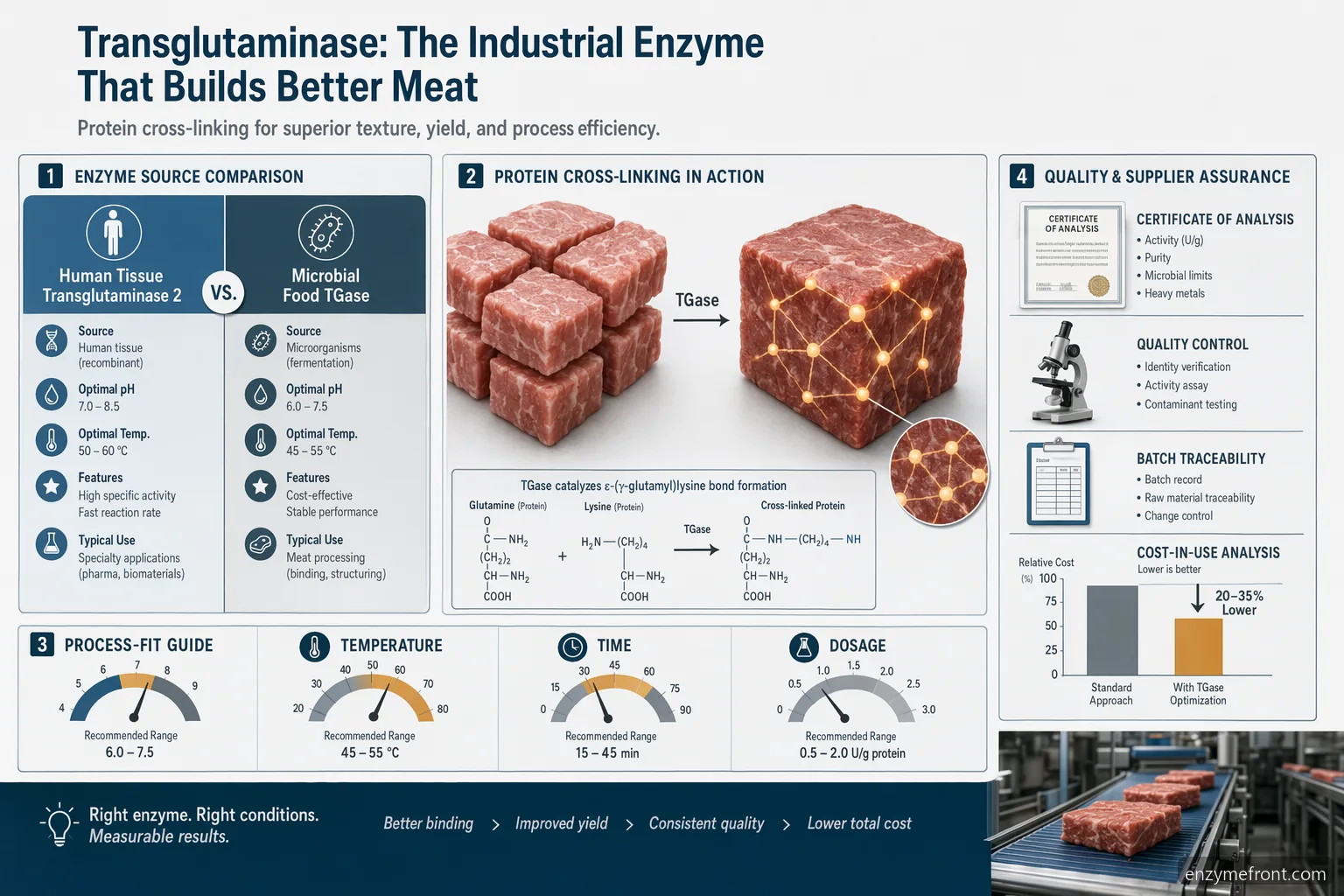
Clarifying the Keyword: Tissue Transglutaminase 2 vs Food TGase
Industrial meat processors often search terms such as tissue transglutaminase 2, tissue transglutaminase, tissue transglutaminase iga, tissue transglutaminase ab iga, tiss transglutaminase iga, anti transglutaminase antibodies, and tissu transglutaminase iga lev. Those phrases are commonly associated with biological research or diagnostic testing, not with a food processing aid. For B2B purchasing, the relevant ingredient is usually microbial transglutaminase, often called transglutaminase enzyme, TGase food, or transglutaminase meat glue. It catalyzes cross-linking between glutamine and lysine residues in proteins, helping bind meat pieces, improve bite, and reduce separation in formed products. A responsible supplier should make this distinction clear and provide food-grade documentation, application limits, and plant-scale handling guidance. This page focuses on procurement and process validation for meat processing, not medical interpretation or supplement advice.
Food application focus: microbial transglutaminase for protein binding • Not a guide to diagnostic tests, antibodies, or clinical results • Buyer priority: reliable performance, documentation, and cost control
Where Transglutaminase Fits in Meat Processing
Transglutaminase is used in value-added meat systems where protein binding, shape retention, and slice integrity are important. Common applications include restructured steaks, poultry rolls, bacon-style composites, sausage systems, formed ham, portion-controlled trim utilization, and marinated products where the processor wants better cohesion without excessive binder addition. The enzyme works best when it has access to functional myofibrillar proteins, so raw material condition, chopping, tumbling, salt extraction, hydration, and mixing order all affect results. Buyers should evaluate whether the product format requires surface binding, internal texture improvement, or both. In many plants, TGase is not a universal fix for low-quality raw material; it is a process tool that performs best when upstream handling and formulation are controlled. The supplier should help match enzyme activity, carrier system, and dosage to the specific meat matrix.
Restructured whole-muscle products • Cooked ham, poultry, and formed meat items • Trim valorization and portion control • Improved sliceability and reduced product breakage
Typical Process Conditions to Validate
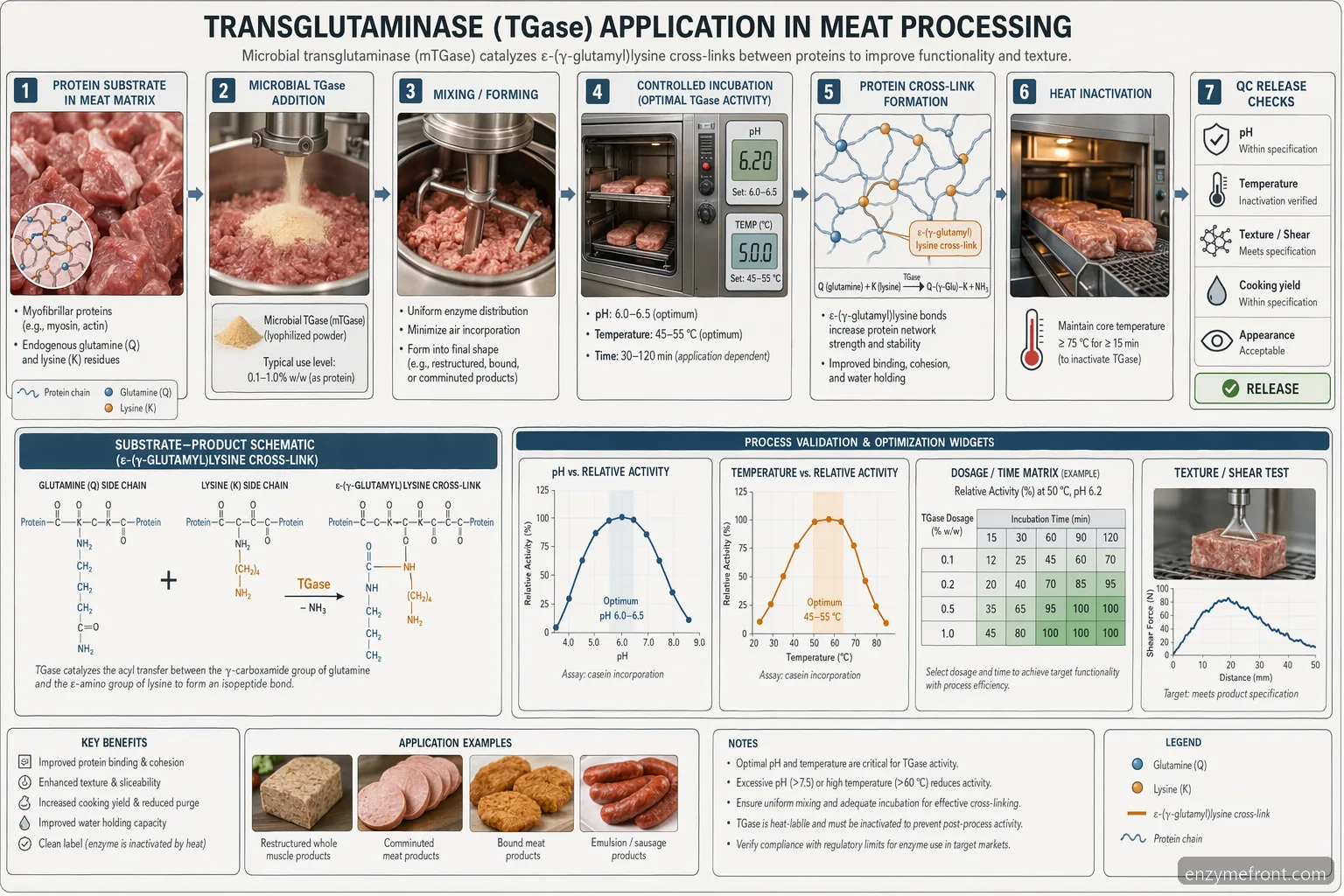
Most meat processors begin screening transglutaminase in a practical pH range of about 5.0-8.0, with many meat systems falling near pH 5.6-6.5. Activity depends on the supplier’s enzyme preparation, but trials often use chilled mixing followed by a holding step that may range from 2-12 hours under refrigerated conditions, or shorter controlled holds at moderate temperatures when permitted by the product and food safety plan. Dosage is commonly evaluated in bands such as 0.1-1.0% of enzyme preparation, or by activity units per kilogram, depending on the product concentration. Salt, phosphate, fat level, moisture, particle size, and heat treatment all influence binding. Always validate against the supplier TDS and your HACCP or food safety procedures. Avoid assuming that conditions from dairy, noodles, or seafood transfer directly to meat processing.
Screen pH: typically 5.0-8.0, product dependent • Trial dosage: often 0.1-1.0% enzyme preparation • Control temperature, hold time, salt, and mixing energy • Confirm conditions with supplier TDS and plant safety rules
QC Checks for Pilot and Scale-Up Trials
A strong pilot plan should connect enzyme dosage to measurable finished-product performance. For raw or cooked restructured meat, evaluate bond strength, sliceability, purge loss, cook yield, bite, color, and appearance after chilling, freezing, thawing, and reheating where relevant. Include negative controls and at least two dosage points so the team can identify under-binding, over-firm texture, or unnecessary cost. Document batch size, raw material temperature, mixing time, hold time, casing or mold pressure, thermal process, and final pH. Sensory review matters because excessive binding can change bite or chew. QC teams should also verify lot traceability, enzyme activity declared on the COA, microbiological parameters when supplied, and handling instructions. During scale-up, compare pilot texture results with line realities such as pump shear, filling pressure, residence time, and sanitation constraints.
Measure bond strength, purge, cook yield, and slice integrity • Run a control plus multiple dosage points • Track raw material, mixing, hold, and thermal variables • Verify lot traceability and COA activity data
Supplier Qualification and Documentation
B2B buyers should qualify a transglutaminase supplier on both technical fit and supply reliability. Request a current COA for the offered lot, a technical data sheet with activity definition and application guidance, and an SDS covering handling, storage, and occupational exposure controls. Ask for ingredient composition, carrier information, allergen statements, country of origin, shelf life, storage temperature, packaging format, and recommended use levels. Do not rely only on a generic product name such as meat glue, because enzyme concentration and carrier systems can differ significantly. A practical supplier should support pilot validation, provide realistic lead times, and explain how batch consistency is controlled. If your market requires specific labeling or regulatory review, confirm requirements with your internal regulatory team before purchase rather than assuming a universal status.
COA: lot activity, quality parameters, traceability • TDS: dosage, pH, temperature, and application notes • SDS: safe handling and storage guidance • Regulatory and labeling review by the buyer’s team
Cost-in-Use: Beyond the Price per Kilogram
The lowest transglutaminase price per kilogram is not always the lowest production cost. Buyers should calculate cost-in-use by comparing effective dosage, enzyme activity, yield improvement, rework reduction, labor savings, waste reduction, and final product quality. A concentrated product may cost more per kilogram but use less per batch, while a diluted preparation may simplify handling but increase freight and storage needs. Evaluate whether the enzyme improves trim utilization without creating texture defects or labeling concerns. Include pilot waste, scale-up scrap, changeover time, and operator training in the commercial decision. A good supplier will help estimate dosage ranges and provide samples for validation, but the final economics should be based on plant data. Procurement, R&D, QA, and production should agree on acceptance criteria before approving routine supply.
Compare cost per finished kilogram, not only enzyme price • Include yield, waste, labor, and rework impacts • Account for concentration, carrier, packaging, and freight • Use plant trial data before commercial approval
Technical Buying Checklist
Buyer Questions
No. Tissue transglutaminase 2 is generally discussed in biological, research, or diagnostic contexts. Meat processors normally evaluate microbial transglutaminase for food protein cross-linking. When purchasing for industrial meat processing, request food-grade product documentation, application data, COA, TDS, and SDS. Do not use diagnostic terms such as tissue transglutaminase iga or anti transglutaminase antibodies as product specifications.
A practical starting screen is often 0.1-1.0% of the enzyme preparation, or a supplier-defined activity range per kilogram of meat batter or whole-muscle pieces. The right level depends on enzyme concentration, protein availability, salt extraction, particle size, hold time, and desired bite. Run a control and at least two dosage points, then measure slice integrity, purge, cook yield, and sensory texture.
At minimum, request a certificate of analysis for the specific lot, a technical data sheet with activity definition and process guidance, and an SDS for safe handling. Buyers should also ask for ingredient composition, allergen statement, storage conditions, shelf life, packaging size, traceability information, and country of origin. Any labeling or regulatory status should be reviewed by your internal compliance team.
It can support cost optimization when it improves trim utilization, sliceability, yield, and rework rates, but savings are product specific. The proper comparison is cost-in-use per kilogram of saleable finished product, not price per kilogram of enzyme. Include dosage, activity, freight, storage, trial scrap, labor impact, and sensory acceptance. A plant pilot is the best basis for commercial approval.
Key variables include raw material quality, pH, temperature, salt level, moisture, fat content, mixing energy, hold time, and thermal processing. TGase needs accessible proteins to form effective cross-links, so under-extracted or poorly handled meat may show weak binding. During scale-up, also monitor pump shear, filling pressure, residence time, sanitation windows, and whether the actual line temperature matches the pilot protocol.
Transglutaminase (TGase) for Research & Industry
Need Transglutaminase (TGase) for your lab or production process?
ISO 9001 certified · Food-grade & research-grade · Ships to 80+ countries
Frequently Asked Questions
Is tissue transglutaminase 2 the same as meat processing transglutaminase?
No. Tissue transglutaminase 2 is generally discussed in biological, research, or diagnostic contexts. Meat processors normally evaluate microbial transglutaminase for food protein cross-linking. When purchasing for industrial meat processing, request food-grade product documentation, application data, COA, TDS, and SDS. Do not use diagnostic terms such as tissue transglutaminase iga or anti transglutaminase antibodies as product specifications.
What dosage should a meat plant test first?
A practical starting screen is often 0.1-1.0% of the enzyme preparation, or a supplier-defined activity range per kilogram of meat batter or whole-muscle pieces. The right level depends on enzyme concentration, protein availability, salt extraction, particle size, hold time, and desired bite. Run a control and at least two dosage points, then measure slice integrity, purge, cook yield, and sensory texture.
What documents should a transglutaminase supplier provide?
At minimum, request a certificate of analysis for the specific lot, a technical data sheet with activity definition and process guidance, and an SDS for safe handling. Buyers should also ask for ingredient composition, allergen statement, storage conditions, shelf life, packaging size, traceability information, and country of origin. Any labeling or regulatory status should be reviewed by your internal compliance team.
Can transglutaminase reduce meat formulation cost?
It can support cost optimization when it improves trim utilization, sliceability, yield, and rework rates, but savings are product specific. The proper comparison is cost-in-use per kilogram of saleable finished product, not price per kilogram of enzyme. Include dosage, activity, freight, storage, trial scrap, labor impact, and sensory acceptance. A plant pilot is the best basis for commercial approval.
What process variables most affect TGase performance in meat?
Key variables include raw material quality, pH, temperature, salt level, moisture, fat content, mixing energy, hold time, and thermal processing. TGase needs accessible proteins to form effective cross-links, so under-extracted or poorly handled meat may show weak binding. During scale-up, also monitor pump shear, filling pressure, residence time, sanitation windows, and whether the actual line temperature matches the pilot protocol.
Ready to source?
Turn This Guide Into a Supplier Brief Request a transglutaminase sample, COA, TDS, SDS, and pilot trial guidance for your meat application.
Contact Us to Contribute