Transglutaminase IgA Autoantibodies: Meat Processing Guide
Industrial guide to food-grade transglutaminase for meat processing, with dosage, pH, temperature, QC, COA/TDS/SDS, and supplier checks.
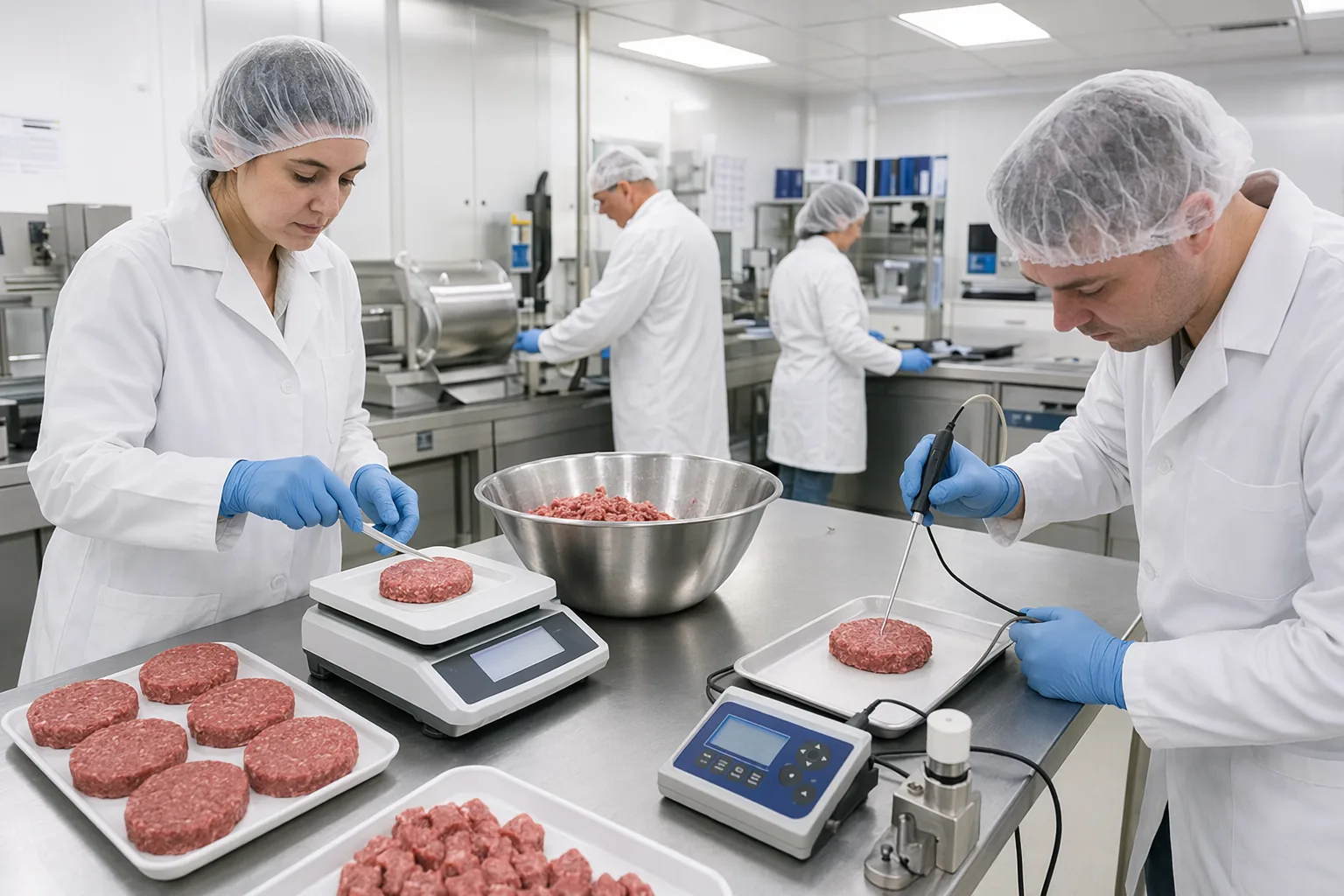
For industrial buyers, this page separates clinical search terms from food-grade transglutaminase use and outlines practical process controls for meat restructuring, binding, and yield optimization.
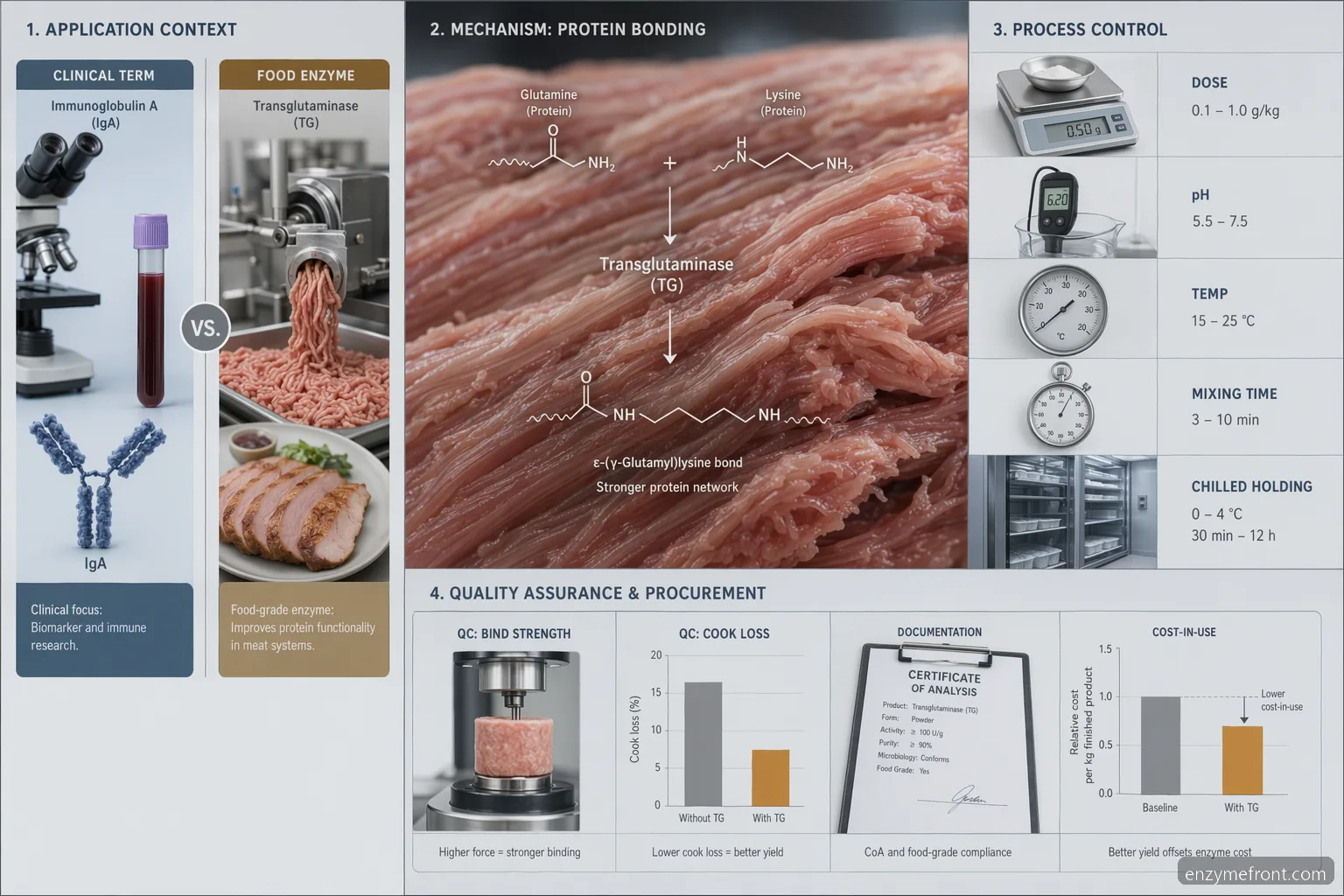
Clarifying the Search Term for Industrial Buyers
The phrase transglutaminase IgA autoantibodies often appears in clinical searches alongside tissue transglutaminase IgA, tissue transglutaminase Ab IgA, anti transglutaminase antibodies, and misspelled variants such as tiss transglutaminase IgA or tissu transglutaminase IgA lev. Those terms relate to laboratory diagnostics and should not be used to specify an industrial enzyme ingredient. For meat processors, the relevant material is food-grade transglutaminase, commonly called TGase food or, informally, transglutaminase meat glue. It catalyzes cross-linking between protein-bound glutamine and lysine residues, helping form stable protein networks in meat systems. Procurement teams should therefore request enzyme activity, formulation composition, recommended applications, usage limits, processing guidance, and regulatory documentation rather than antibody-related information. This guide focuses on B2B meat processing decisions, not medical testing, supplement advice, or disease interpretation.
Clinical antibody terms are not enzyme quality parameters. • Food-grade TGase should be assessed through process performance and documentation. • Always match the enzyme format to the meat matrix and plant workflow.
How Transglutaminase Works in Meat Processing
In meat systems, transglutaminase enzyme supports protein bonding in comminuted, injected, tumbled, formed, or restructured products. Typical targets include portioned beef, poultry, pork, seafood analog applications, and value-added products where uniform texture and slice integrity are required. The enzyme works best when it is distributed evenly and allowed sufficient contact time with functional proteins. Salt, phosphates, mixing intensity, particle size, moisture, and protein availability all influence results. In practical use, TGase is added as a powder blend, slurry, or premix, then incorporated during mixing, tumbling, or forming. The product is held under refrigerated or controlled conditions to develop binding before cooking, freezing, slicing, or packaging. Because enzyme systems vary by activity and carriers, processors should avoid copying dosage directly from another plant without trials.
Best suited for protein-rich matrices with good surface contact. • Uniform dispersion is critical for consistent binding. • Process design should consider hold time before thermal inactivation.
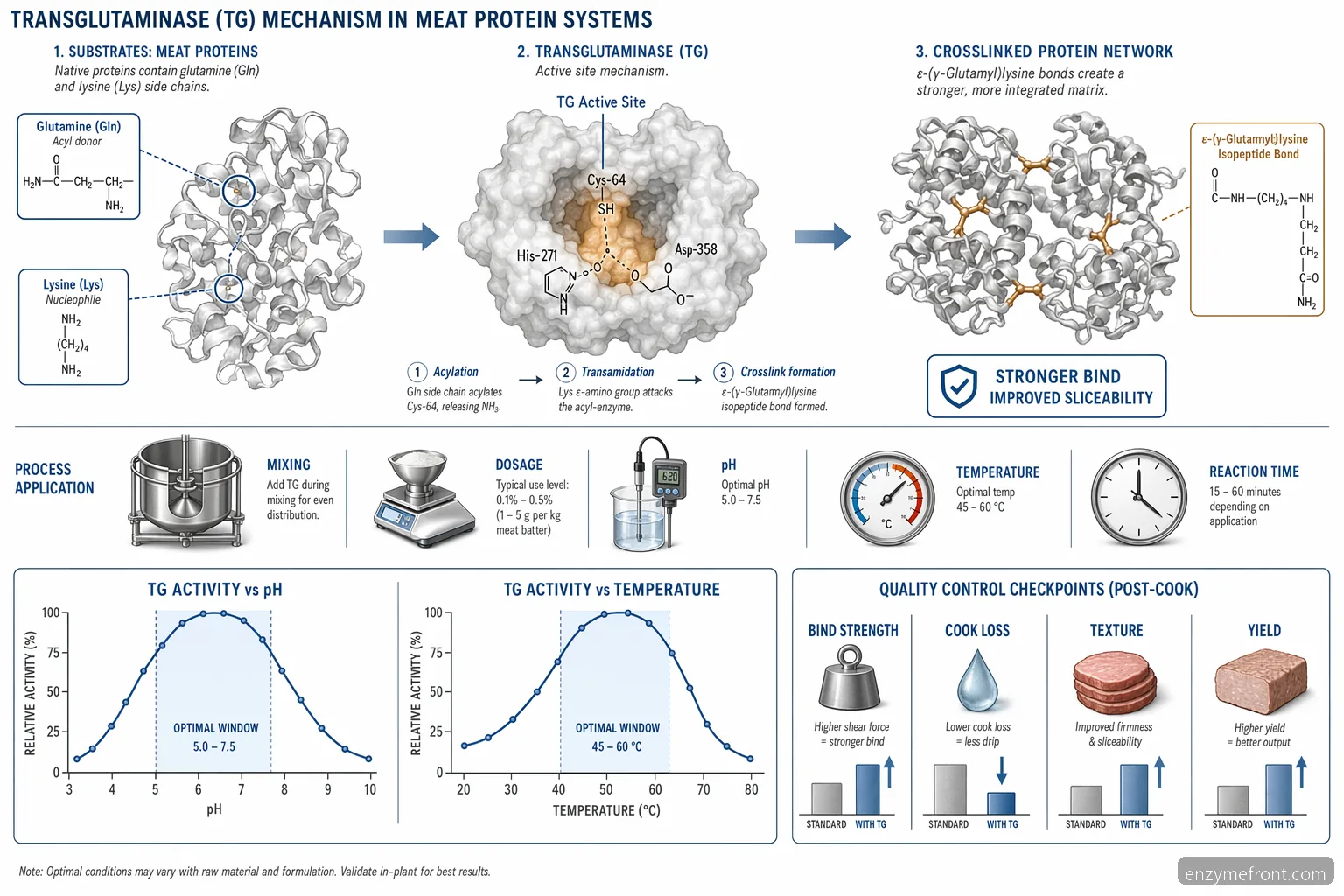
Typical Process Conditions and Dosage Bands
Food-grade transglutaminase used in meat processing commonly performs in mildly acidic to neutral systems, often around pH 5.5 to 7.0, depending on the formulation and product. Many commercial processes run enzyme development at refrigerated to moderate temperatures, such as 0 to 10 °C for extended holding or 20 to 45 °C for shorter controlled applications where food safety plans allow. Typical starting dosage bands may range from 0.1% to 1.0% of the meat block for blended preparations, but the correct level depends on enzyme activity, carrier dilution, protein content, desired bind, and legal labeling requirements. Processors should validate time and temperature combinations through pilot trials, not assumptions. Thermal cooking generally reduces enzyme activity, but final safety and quality must be confirmed according to the plant HACCP or food safety plan.
Common working pH: approximately 5.5 to 7.0. • Typical trial dosage: 0.1% to 1.0% for blended products. • Validate temperature, hold time, and inactivation in the actual product.
QC Checks for Pilot and Scale-Up Trials
A reliable TGase evaluation should measure more than visual binding. Pilot trials should compare control and treated batches using defined formulas, mixing times, temperatures, and hold conditions. Useful QC checks include raw bind strength, sliceability, tensile or texture analysis, purge loss, cook yield, color stability, sensory texture, surface defects, and package performance after chilled or frozen storage. For formed meats, processors should test cutting behavior, portion integrity, and separation after thermal processing. For injected or tumbled products, confirm that the enzyme does not create uneven texture or localized gel spots. Microbiological controls remain essential because holding time may increase process exposure. Documenting each trial supports cost-in-use calculations and helps determine whether higher enzyme dosage delivers meaningful value or simply adds formulation cost.
Compare against a no-enzyme control batch. • Track yield, purge, texture, and slicing performance. • Include storage and distribution simulation before approval.
Supplier Qualification and Documentation
Industrial buyers should qualify transglutaminase suppliers through documentation, lot consistency, technical support, and commercial reliability. Request a current Certificate of Analysis for each lot, plus a Technical Data Sheet and Safety Data Sheet. The COA should identify the product, lot number, activity or specification basis where applicable, appearance, microbiological limits, and release criteria. The TDS should describe recommended applications, dosage guidance, storage conditions, shelf life, carrier ingredients, and handling instructions. The SDS should support workplace safety review and employee training. Buyers should also confirm allergen declarations, country of origin where required, regulatory status for the intended market, and change-control practices. Strong supplier qualification reduces the risk of reformulation delays, inconsistent binding, labeling surprises, and unplanned downtime.
Request COA, TDS, and SDS before pilot approval. • Confirm allergen, carrier, storage, and shelf-life details. • Assess technical support, lead times, and batch-to-batch consistency.
Cost-in-Use for Meat Glue Applications
The lowest price per kilogram is not always the lowest cost-in-use. Transglutaminase meat glue economics depend on enzyme activity, dosage, labor impact, yield improvement, rework reduction, slicing efficiency, waste reduction, and customer acceptance. A higher-activity or better-dispersing formulation may cost more per kilogram but require a lower inclusion rate or produce more reliable results. Conversely, an inexpensive product can become costly if it causes weak binding, dusting losses, poor hydration, uneven distribution, or rejected finished goods. Calculate cost per finished kilogram and compare it with measurable benefits under realistic plant conditions. Include handling, storage, batching time, trial losses, labeling impact, and supplier responsiveness. Commercial approval should be based on validated production data, not only bench-top appearance or supplier dosage ranges.
Calculate cost per finished kilogram, not only ingredient price. • Include waste, yield, labor, and rework effects. • Use pilot data to set the commercial dosage.
Technical Buying Checklist
Buyer Questions
No. Transglutaminase IgA autoantibodies, tissue transglutaminase IgA, tissue transglutaminase Ab IgA, and anti transglutaminase antibodies are clinical laboratory terms. They are not specifications for an industrial enzyme ingredient. Meat processors should evaluate food-grade transglutaminase by enzyme activity, formulation, carrier ingredients, process fit, documentation, and finished-product performance.
For many blended food-grade TGase preparations, a practical starting trial range is 0.1% to 1.0% of the meat block. The right dosage depends on enzyme activity, meat protein level, particle size, salt system, mixing method, hold time, and desired bind strength. Commercial levels should be set only after controlled pilot trials and cost-in-use analysis.
Request a current COA, TDS, and SDS before approval. The COA supports lot release review, the TDS provides application and storage guidance, and the SDS supports workplace handling and safety review. Buyers should also ask for allergen information, carrier declaration, shelf life, country-of-origin details where needed, and regulatory support for the intended sales market.
No. Transglutaminase meat glue performs best where sufficient functional protein and surface contact are available. It may be useful in restructured, formed, tumbled, or comminuted meat systems, but results vary with formula, pH, temperature, salt, moisture, and processing time. Pilot validation is necessary to confirm texture, slicing, cooking yield, labeling impact, and consumer acceptance.
Compare suppliers by application support, documentation quality, batch consistency, lead time, change-control practices, and cost-in-use. Do not rely only on price per kilogram. A qualified supplier should help design pilot trials, provide COA/TDS/SDS documents, explain storage and handling, and support troubleshooting without making unsupported performance or regulatory claims.
Transglutaminase (TGase) for Research & Industry
Need Transglutaminase (TGase) for your lab or production process?
ISO 9001 certified · Food-grade & research-grade · Ships to 80+ countries
Frequently Asked Questions
Are transglutaminase IgA autoantibodies related to food-grade TGase?
No. Transglutaminase IgA autoantibodies, tissue transglutaminase IgA, tissue transglutaminase Ab IgA, and anti transglutaminase antibodies are clinical laboratory terms. They are not specifications for an industrial enzyme ingredient. Meat processors should evaluate food-grade transglutaminase by enzyme activity, formulation, carrier ingredients, process fit, documentation, and finished-product performance.
What dosage of transglutaminase should a meat processor start with?
For many blended food-grade TGase preparations, a practical starting trial range is 0.1% to 1.0% of the meat block. The right dosage depends on enzyme activity, meat protein level, particle size, salt system, mixing method, hold time, and desired bind strength. Commercial levels should be set only after controlled pilot trials and cost-in-use analysis.
What documents should I request before buying transglutaminase enzyme?
Request a current COA, TDS, and SDS before approval. The COA supports lot release review, the TDS provides application and storage guidance, and the SDS supports workplace handling and safety review. Buyers should also ask for allergen information, carrier declaration, shelf life, country-of-origin details where needed, and regulatory support for the intended sales market.
Is transglutaminase meat glue suitable for all meat products?
No. Transglutaminase meat glue performs best where sufficient functional protein and surface contact are available. It may be useful in restructured, formed, tumbled, or comminuted meat systems, but results vary with formula, pH, temperature, salt, moisture, and processing time. Pilot validation is necessary to confirm texture, slicing, cooking yield, labeling impact, and consumer acceptance.
How should we compare TGase suppliers?
Compare suppliers by application support, documentation quality, batch consistency, lead time, change-control practices, and cost-in-use. Do not rely only on price per kilogram. A qualified supplier should help design pilot trials, provide COA/TDS/SDS documents, explain storage and handling, and support troubleshooting without making unsupported performance or regulatory claims.
Ready to source?
Turn This Guide Into a Supplier Brief Request a food-grade transglutaminase sample, COA/TDS/SDS package, and pilot trial guidance for your meat application.
Contact Us to Contribute