Tissue Transglutaminase IgG and Industrial Transglutaminase for Meat Processing
B2B guide to transglutaminase enzyme for meat processing: dosing, pH, temperature, QC, COA/TDS/SDS, pilot trials, and supplier checks.
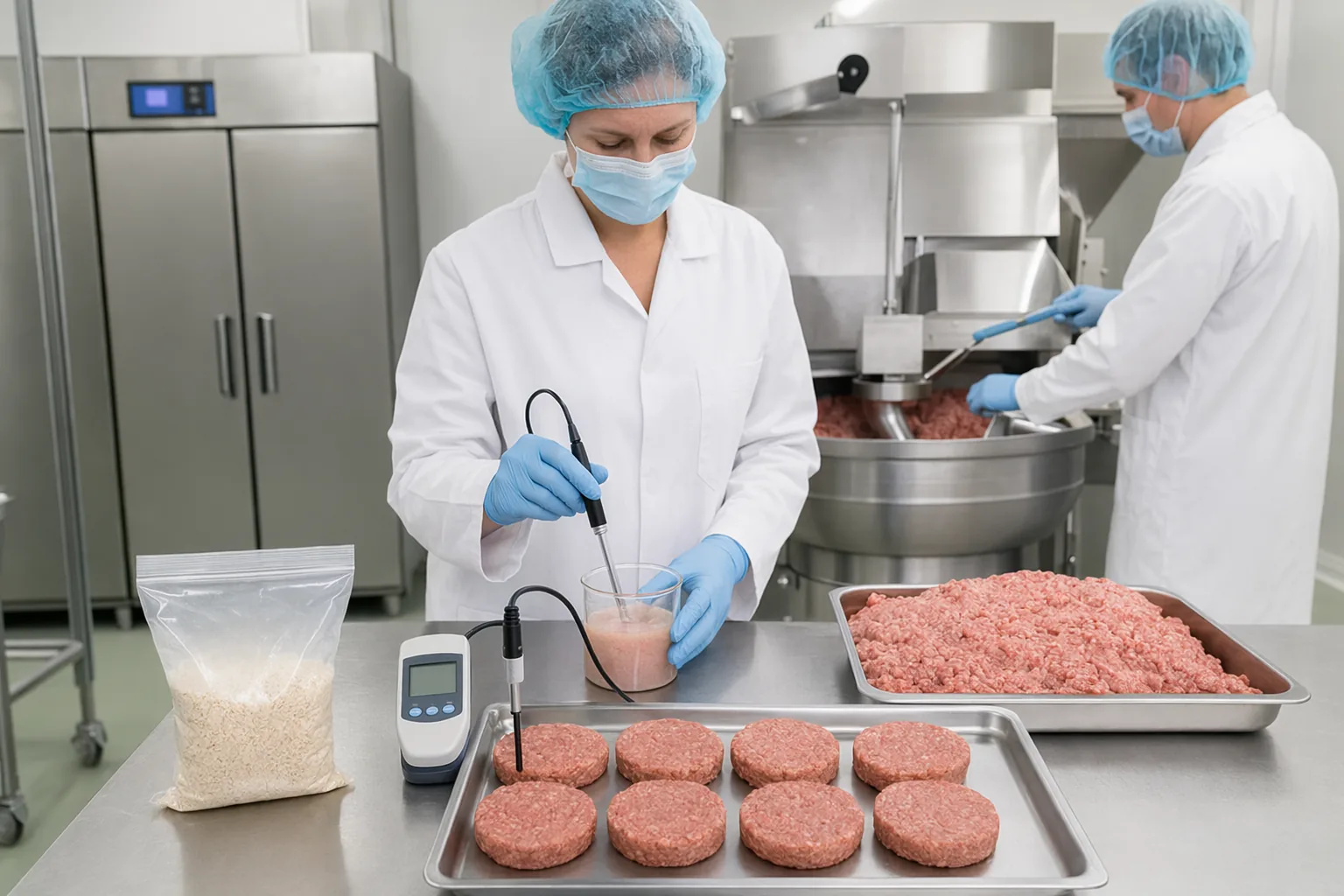
For enzyme buyers and process teams, this guide clarifies the search term tissue transglutaminase IgG while focusing on practical, food-grade transglutaminase use in meat systems.
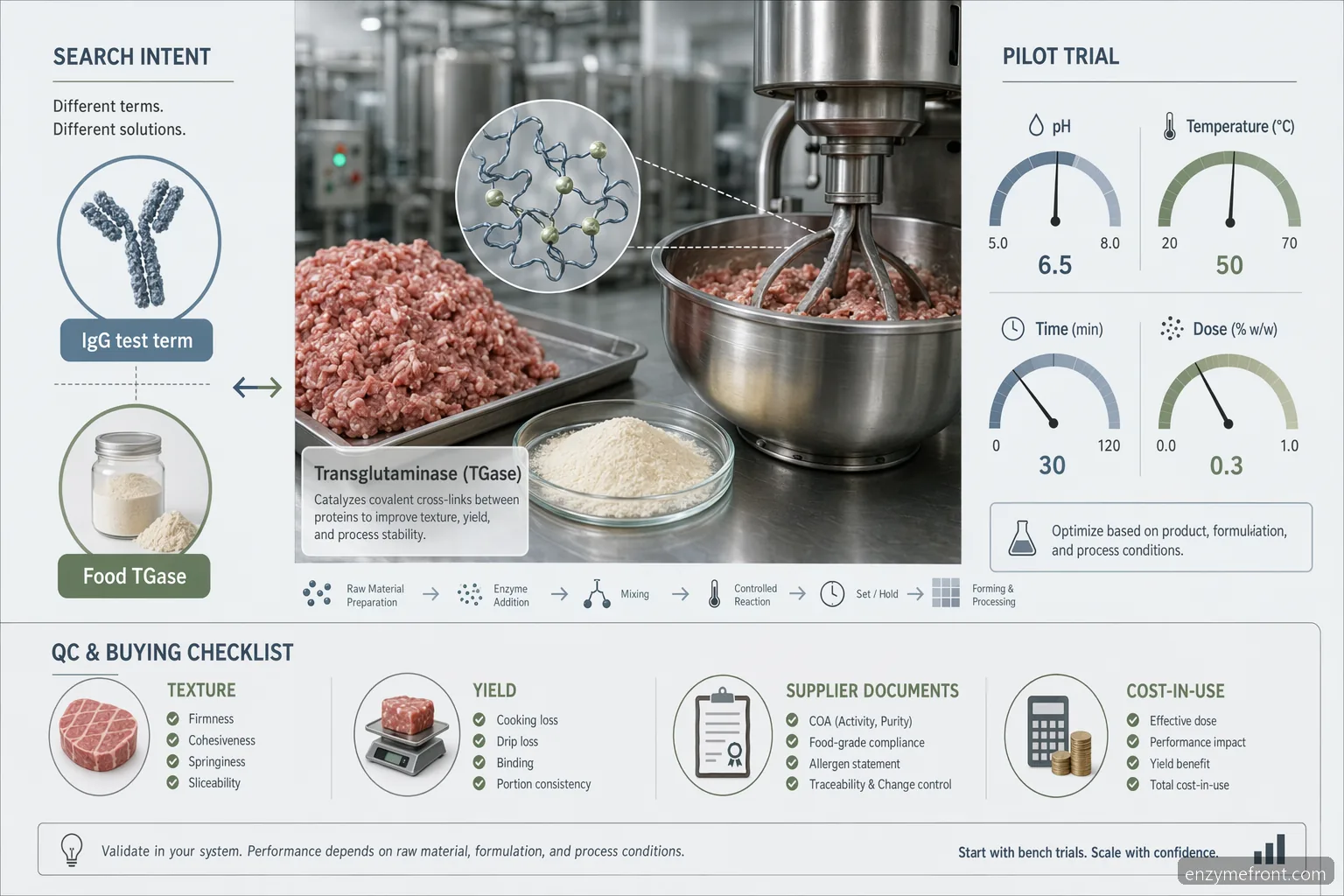
Clarifying the Keyword: Tissue Transglutaminase IgG vs Food TGase
The phrase tissue transglutaminase IgG is commonly associated with clinical antibody testing, not with industrial enzyme procurement. In meat processing, buyers are usually looking for microbial transglutaminase, also called transglutaminase enzyme, TGase food enzyme, or, informally, transglutaminase meat glue. These are different contexts and should not be confused. Industrial TGase is selected for its ability to form cross-links between protein-bound glutamine and lysine residues, improving binding, sliceability, texture, and yield in suitable meat systems. Search variations such as tissue transglutaminase iga, tissue transglutaminase ab iga, tiss transglutaminase iga, tissu transglutaminase iga lev, and anti transglutaminase antibodies may bring visitors from diagnostic terminology; this page is strictly about B2B food processing applications. Enzymefront.com supports manufacturers evaluating food-grade transglutaminase for controlled meat processing, not medical testing, supplements, diagnosis, or treatment.
Clinical term: tissue transglutaminase IgG or IgA antibodies • Industrial term: microbial transglutaminase for food processing • Procurement focus: specification, validation, performance, and compliance documentation
Where Transglutaminase Fits in Meat Processing
In meat processing, transglutaminase is used to improve protein-to-protein binding in products such as restructured steaks, formed poultry, cooked ham, sausages, bacon-style composites, meat rolls, and seafood-meat blends where regulations and labeling permit. The enzyme can help create a stable network during resting or thermal processing, reducing separation and improving cut integrity. It is most effective where sufficient myofibrillar protein is exposed through chopping, tumbling, grinding, or brine extraction. Salt, phosphates, water activity, fat level, and particle size can strongly influence results. TGase is not a substitute for poor raw material control, sanitation, or formulation discipline. For B2B buyers, the practical question is not simply whether transglutaminase works, but whether it delivers repeatable texture, yield, and slicing performance at an acceptable cost-in-use within the plant’s process window.
Common uses: formed meats, restructured cuts, poultry, sausage, cooked ham, and seafood analogs • Primary benefits: binding, texture, portion integrity, and reduced crumbling • Key dependency: exposed functional protein and adequate contact time
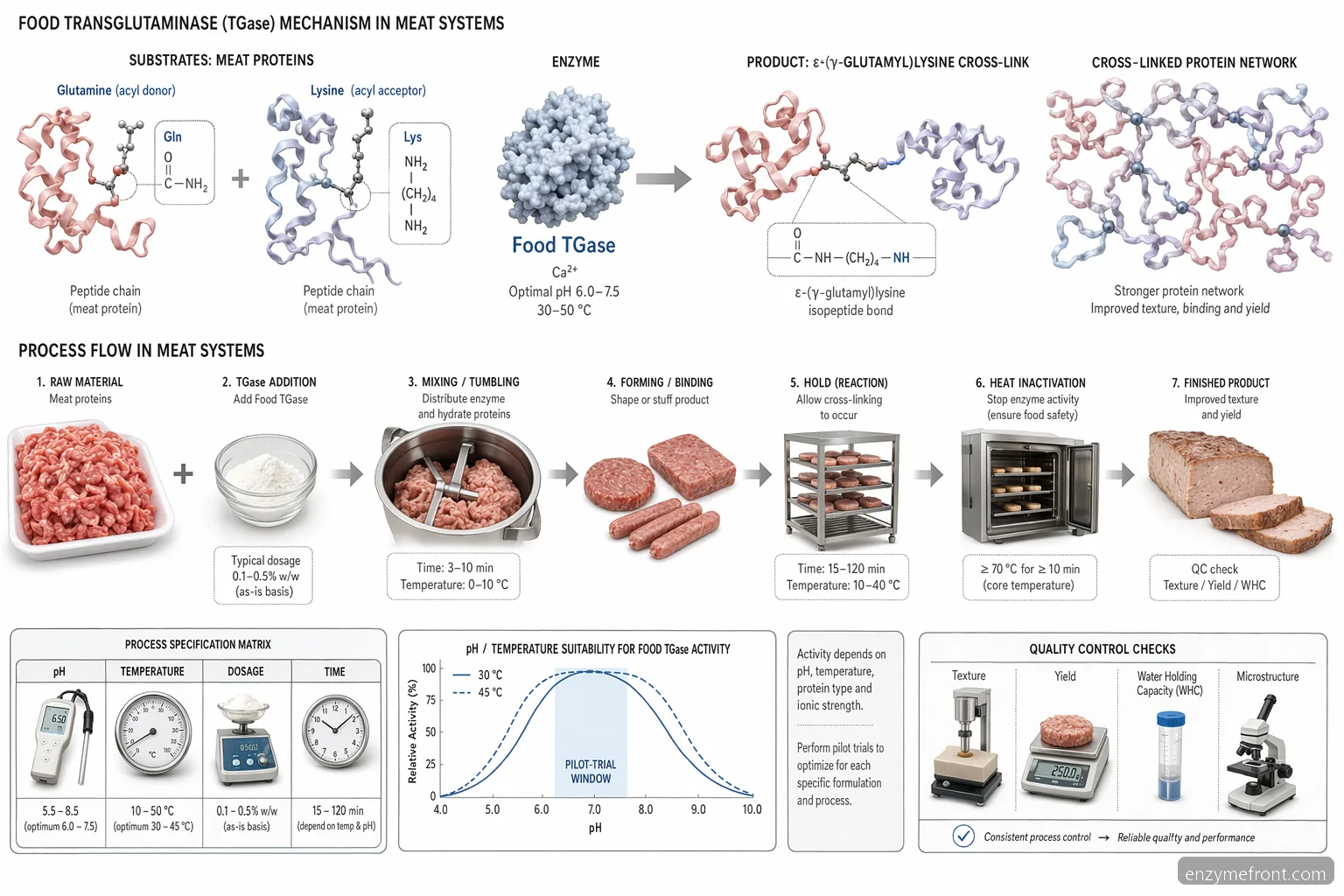
Starting Process Conditions for Pilot Trials
Typical TGase food trials begin with a dosage range of about 0.2% to 1.0% enzyme preparation by finished product weight, depending on enzyme activity, carrier composition, substrate protein, and target texture. Many meat systems perform well around pH 5.5 to 7.0, with activity commonly supported in chilled or moderate-temperature processes. A practical trial window is 4°C to 10°C for extended setting, such as overnight rest, or 20°C to 45°C for shorter reaction time where food safety controls allow. Avoid assuming that higher dose always improves quality; overdosing can create rubbery bite, reduced juiciness, or processing losses. Mixing should distribute enzyme evenly without overheating the batter. For formed products, maintain intimate surface contact, vacuum pack or mold where useful, and define a controlled rest time before cooking, freezing, slicing, or packaging.
Initial dosage: 0.2% to 1.0% of finished product weight • Typical pH target: about 5.5 to 7.0 • Chilled setting: 4°C to 10°C with longer holding time • Warm reaction option: 20°C to 45°C with validated food safety controls • Optimize by texture target, not by maximum enzyme addition
Quality Control Checks That Matter
QC should connect enzyme use to measurable product performance. For incoming material, confirm lot number, activity declaration, appearance, odor, carrier base, allergen information, and shelf-life against the COA and TDS. During production, monitor raw meat temperature, pH, brine uptake, mixing time, vacuum level, mold fill, rest time, and cook schedule. Finished product checks may include sliceability, bind strength, purge, cook yield, water retention, texture profile analysis, sensory review, and appearance after chilling or freeze-thaw. Microbiological controls remain essential because transglutaminase does not make unsafe meat safe. Plants should also verify that enzyme dust handling, storage humidity, and opened-bag usage follow the SDS and internal procedures. A good approval process compares a control batch, a low-dose batch, and a target-dose batch under identical plant conditions.
Incoming QC: COA, TDS, SDS, allergen status, lot traceability • In-process QC: temperature, pH, mixing, rest time, and molding pressure • Finished QC: bind strength, slice yield, purge, texture, and sensory profile • Food safety: validate controls independently of enzyme performance
Cost-in-Use and Supplier Qualification
For industrial buyers, transglutaminase price per kilogram is less important than cost-in-use per metric ton of finished product. Calculate enzyme addition rate, functional activity, carrier contribution, yield improvement, labor impact, reduced trim loss, slicing efficiency, and customer acceptance. A lower-priced product may cost more if it requires higher dosage, creates inconsistent binding, or complicates labeling. Supplier qualification should include current COA format, TDS, SDS, manufacturing traceability, batch-to-batch consistency data, recommended storage conditions, lead time, packaging size, change notification practice, and technical support for pilot validation. Ask whether the supplier can support your exact application: meat processing, dairy, noodles, or seafood may require different formulations and trial designs. Before scale-up, run plant trials using actual raw materials, equipment, sanitation cycles, and intended thermal or chilled process conditions.
Evaluate cost per finished product batch, not enzyme unit price only • Request technical documents before sampling • Confirm packaging, shelf life, storage, and lead time • Use pilot validation before commercial approval
Technical Buying Checklist
Buyer Questions
No. Tissue transglutaminase IgG refers to a clinical antibody testing term, while meat processing normally uses food-grade microbial transglutaminase. The industrial enzyme is evaluated for protein cross-linking, texture, binding, and process performance. This page is intended for B2B food manufacturers and procurement teams, not for medical diagnosis, dietary advice, or interpretation of tissue transglutaminase IgA or IgG test results.
A practical starting point is often 0.2% to 1.0% enzyme preparation by finished product weight, depending on activity, formulation, raw material, and target bite. Begin with a control, low-dose, and mid-dose pilot trial. Measure bind strength, slice yield, purge, cook yield, and sensory texture. Final dosage should be based on validated cost-in-use and finished product specifications.
The most important variables are available protein, pH, temperature, moisture, salt system, mixing uniformity, contact time, and downstream cooking or chilling. Many meat systems are tested near pH 5.5 to 7.0. Chilled setting at 4°C to 10°C may require longer time, while warmer reaction conditions can be faster but require validated food safety controls.
Request a certificate of analysis, technical data sheet, safety data sheet, allergen statement, ingredient declaration, storage guidance, shelf-life, lot traceability, and packaging information. For supplier qualification, also review batch consistency, change notification practice, lead time, technical support capability, and suitability for your application. Approval should include pilot validation before routine commercial use.
Calculate cost-in-use by combining enzyme dosage, activity, finished batch weight, yield change, trimming reduction, slicing performance, labor impact, rework reduction, and customer acceptance. Do not compare suppliers by price per kilogram alone. A product with higher unit price may be more economical if it works at lower dosage, improves consistency, and reduces processing losses.
Transglutaminase (TGase) for Research & Industry
Need Transglutaminase (TGase) for your lab or production process?
ISO 9001 certified · Food-grade & research-grade · Ships to 80+ countries
Frequently Asked Questions
Is tissue transglutaminase IgG the same as transglutaminase used in meat processing?
No. Tissue transglutaminase IgG refers to a clinical antibody testing term, while meat processing normally uses food-grade microbial transglutaminase. The industrial enzyme is evaluated for protein cross-linking, texture, binding, and process performance. This page is intended for B2B food manufacturers and procurement teams, not for medical diagnosis, dietary advice, or interpretation of tissue transglutaminase IgA or IgG test results.
What dosage of transglutaminase should a meat plant start with?
A practical starting point is often 0.2% to 1.0% enzyme preparation by finished product weight, depending on activity, formulation, raw material, and target bite. Begin with a control, low-dose, and mid-dose pilot trial. Measure bind strength, slice yield, purge, cook yield, and sensory texture. Final dosage should be based on validated cost-in-use and finished product specifications.
Which process conditions are most important for TGase food applications?
The most important variables are available protein, pH, temperature, moisture, salt system, mixing uniformity, contact time, and downstream cooking or chilling. Many meat systems are tested near pH 5.5 to 7.0. Chilled setting at 4°C to 10°C may require longer time, while warmer reaction conditions can be faster but require validated food safety controls.
What documents should buyers request before approving a transglutaminase supplier?
Request a certificate of analysis, technical data sheet, safety data sheet, allergen statement, ingredient declaration, storage guidance, shelf-life, lot traceability, and packaging information. For supplier qualification, also review batch consistency, change notification practice, lead time, technical support capability, and suitability for your application. Approval should include pilot validation before routine commercial use.
How should cost-in-use be calculated for transglutaminase meat glue applications?
Calculate cost-in-use by combining enzyme dosage, activity, finished batch weight, yield change, trimming reduction, slicing performance, labor impact, rework reduction, and customer acceptance. Do not compare suppliers by price per kilogram alone. A product with higher unit price may be more economical if it works at lower dosage, improves consistency, and reduces processing losses.
Ready to source?
Turn This Guide Into a Supplier Brief Request a transglutaminase sample, COA/TDS/SDS package, and pilot-trial guidance for your meat processing line.
Contact Us to Contribute